2026-10-22 ·
First Hour After a Water Leak
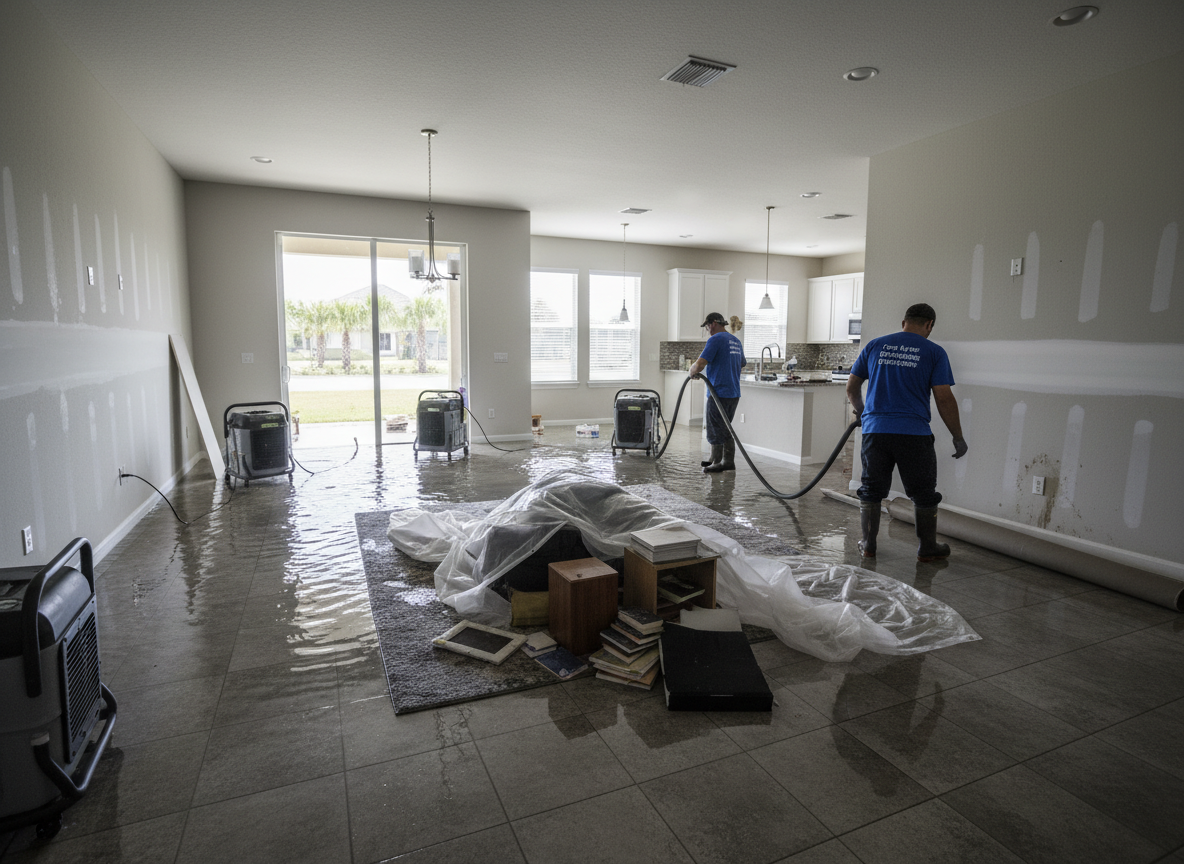
Water in a Fort Myers house is rarely a single problem. A supply line that let go under a sink also wets the cabinet, the wall behind it and the slab underneath, and the clock starts as soon as the water stops running. The first hour is about limiting the spread and keeping a record, not about pulling the house apart.
Stop the water, then stop the power
If the water is coming from a fixture, a toilet or an appliance, close the angle stop behind it or the valve on the supply line. If you cannot reach it, shut off the main at the meter. Do not stand in standing water to reach a panel or an outlet: if water is near electrical outlets, a panel or an appliance that is still plugged in, leave the room and call an electrician before anything else.
Once the water is off, unplug what you can reach safely and move rugs, furniture and cardboard off the wet floor. Cardboard and paper hold water against a slab and are usually thrown away anyway. Do not run a household vacuum in standing water, and do not use a shop vacuum on a ceiling or a wall cavity that is still holding water.
Photograph before you move anything
A phone photo is the cheapest documentation you will ever make. Photograph the source, the wet floor, the water line on a cabinet or a wall, and any furniture or belonging that is damaged. Then photograph the meter reading if you have one. Insurers and property managers ask for the same four things: what was wet, where it came from, when it happened and what was removed. A photo taken in the first hour answers three of them.
What to leave alone
Do not cut drywall to "let it breathe". In a block-and-stucco house, a hole in the wall does not dry the cavity; it just spreads dust and, if there is growth, spores. Do not pull up tile to check the slab, and do not spray a damp wall with household cleaner. If the water is cloudy, smells, or came from a toilet, a drain or outside, treat the area as contaminated and keep people and pets out of it.
Ceilings deserve their own rule. A bulging ceiling can hold several gallons, and poking it from below is how people get soaked and how a ceiling comes down on them. Put a bucket under the bulge, move what is underneath and let someone with the right equipment open it.
Why the first hour matters more here
Fort Myers keeps warm, humid air for most of the year, and air conditioning keeps interior surfaces cool. That combination means a damp wall can support growth in about a day or two, and a closed-up house is worse. The same leak in a dry climate might wait a week; here it does not.
The building stock adds to it. Slab-on-grade floors, block walls and stucco hold water in places a carpet does not show. A lanai track sits below the living floor, a cabinet toe kick hides the bottom plate, and a wall base can read dry at the surface while the block behind it is still wet. That is why a moisture meter, not a hand, decides when the drying is finished.
When to call
Call a water damage crew when the water has reached a wall, a cabinet, a ceiling or a carpeted room, or when you cannot find the source. Call a plumber first if a supply line is still leaking and the valve will not close. Call an electrician first if water is near the panel or an outlet. If the water came from a storm, a roof or a window, the order is usually: stop what you can, photograph, then call.
The number for us is (239) 499-1170. Tell us where the water is, when it appeared and what it has touched, and we will tell you what to do before anyone arrives.